San Pedro, Laguna — serving Metro Manila & CALABARZON
Get a quote

Services

Clean air, certified standards.

Air flushing is a controlled decontamination cycle that removes post-construction pollutants before occupancy — with the extended volume certification schemes require, and the sampling to prove it.

24-hour standard flush 48-hour certification cycle LEED · WELL · EDGE · BERDE
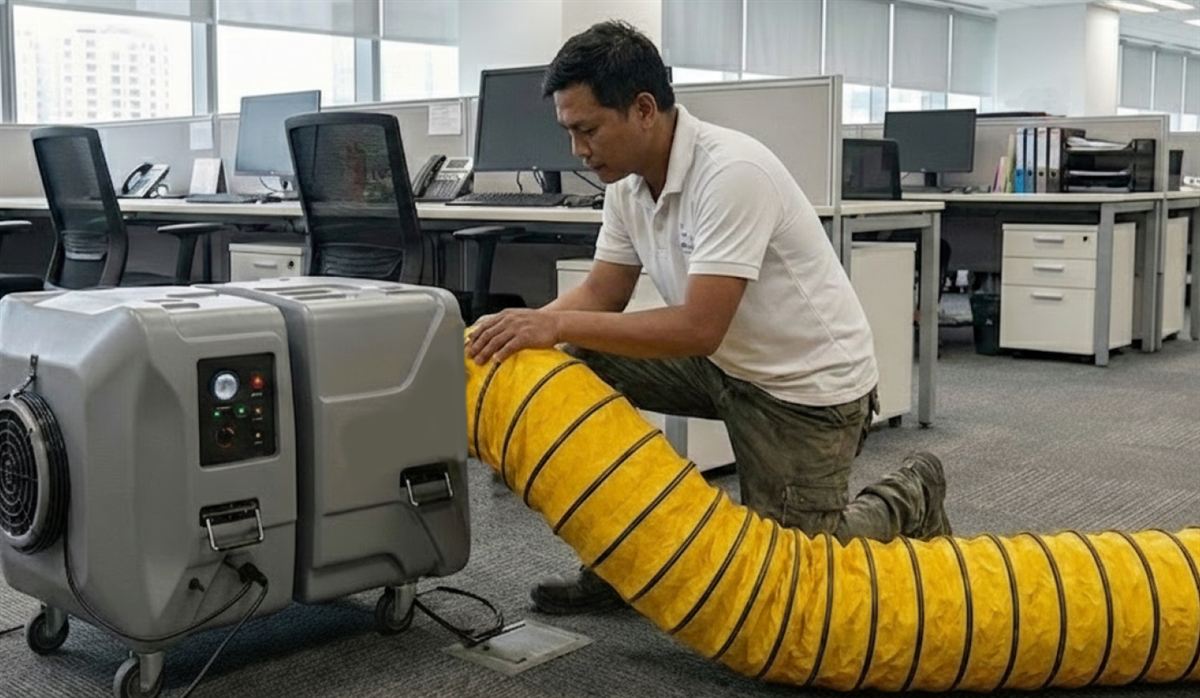
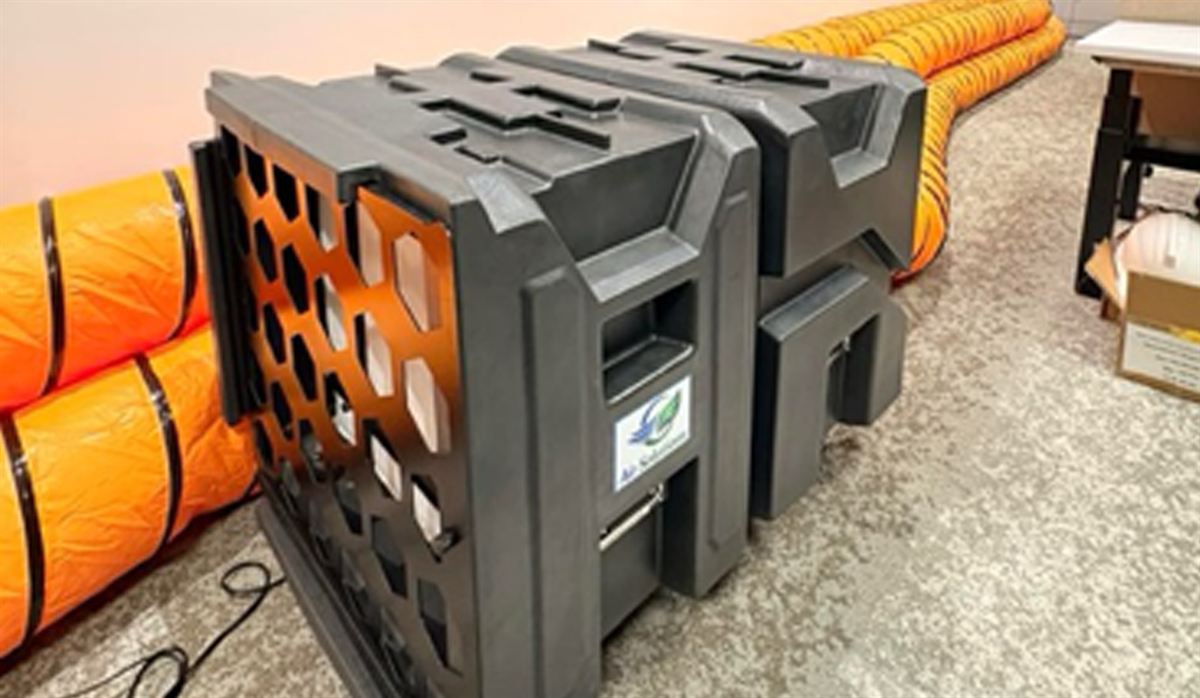
Air flushing equipment stationed in an office before occupancy Controlled ventilation, start to finish

Air flushing

The last step before your team moves in.

Air flushing removes indoor pollutants like formaldehyde, VOCs and dust following construction. While typically a 24-hour process, achieving LEED, WELL, EDGE and BERDE certification requires a 48-hour cycle to meet air volume standards.

  • Planned around your handover — scheduled between contractor turnover and move-in, including overnight and weekend windows.
  • Calculated, not estimated — floor area and ceiling height determine machine count and flush duration.
  • Reported at the end — before-and-after readings for TVOC, formaldehyde, PM2.5 and PM10.

The protocol

The process and the standard

Two numbers decide an air flush: how much air must move, and how long the machines must run to move it.

The process

24-hour continuous flush

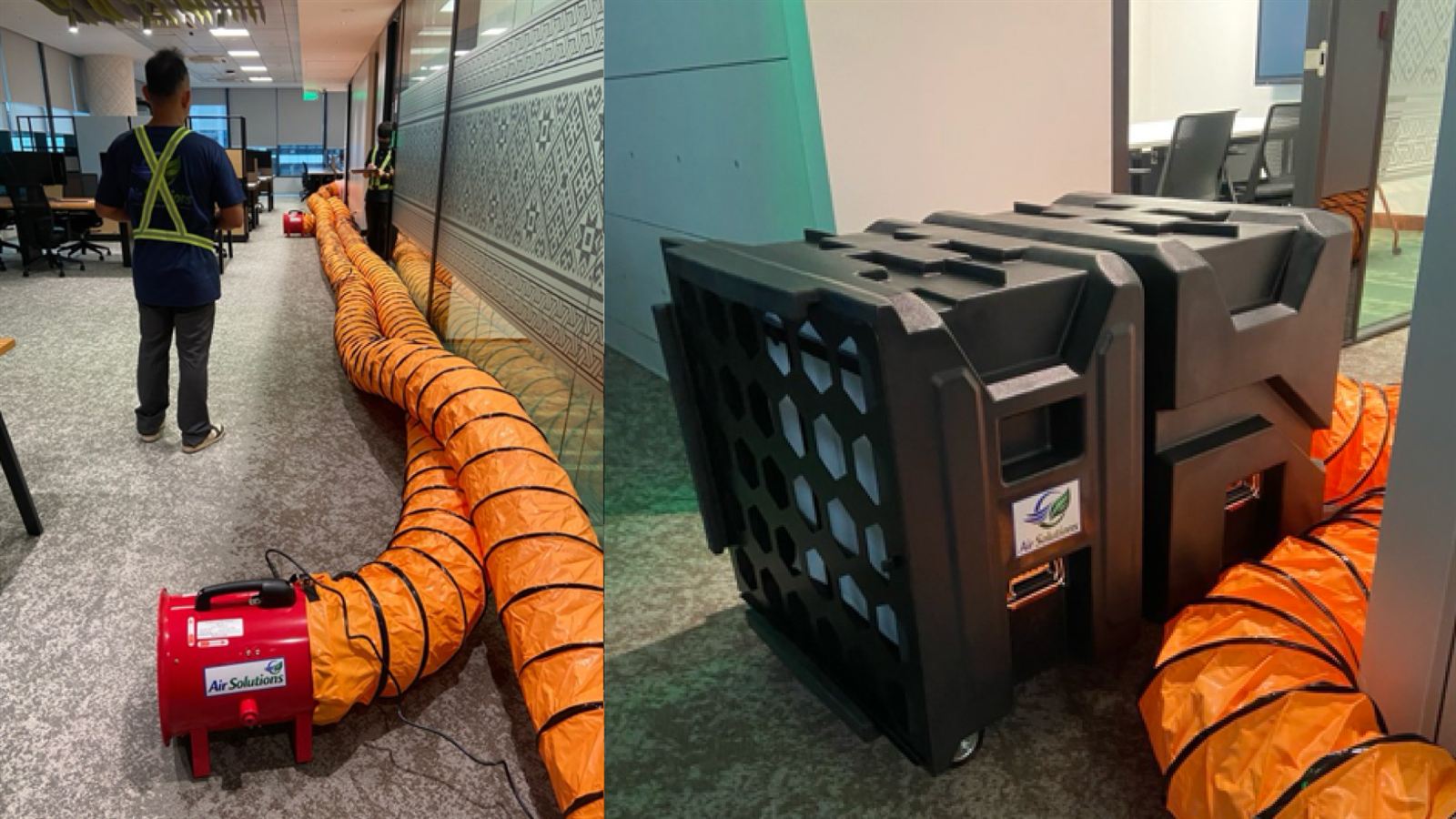
Air flushing is a 24-hour decontamination cycle that removes post-construction pollutants like formaldehyde, VOCs and dust (PM2.5 / PM10) before occupancy. Machines run continuously, so pollutants are cycled out of the space instead of settling into it.
The standards

48 hours for certification

For projects seeking LEED, WELL or BERDE certification — and EDGE-rated fit-outs — a 48-hour flush is required to achieve the necessary total air volume capacity. We plan the longer cycle from the start so the certification timeline holds.

  • LEED
  • WELL
  • EDGE
  • BERDE
  • ASHRAE 62.1 flush volumes

What gets removed

Three things a new office brings with it.

VOCs and formaldehyde

Released by new carpets, furniture, paints and adhesives — and the usual cause of that "new office" smell that lingers for weeks.

Particulate matter

Fine dust and debris from construction materials, including PM10 and PM2.5 — the particles small enough to reach deep into the lungs.

Chemical odours

Lingering smells from varnishes and industrial cleaners, cleared by continuous air exchange rather than masked with fragrance.

On site

What a flush looks like.

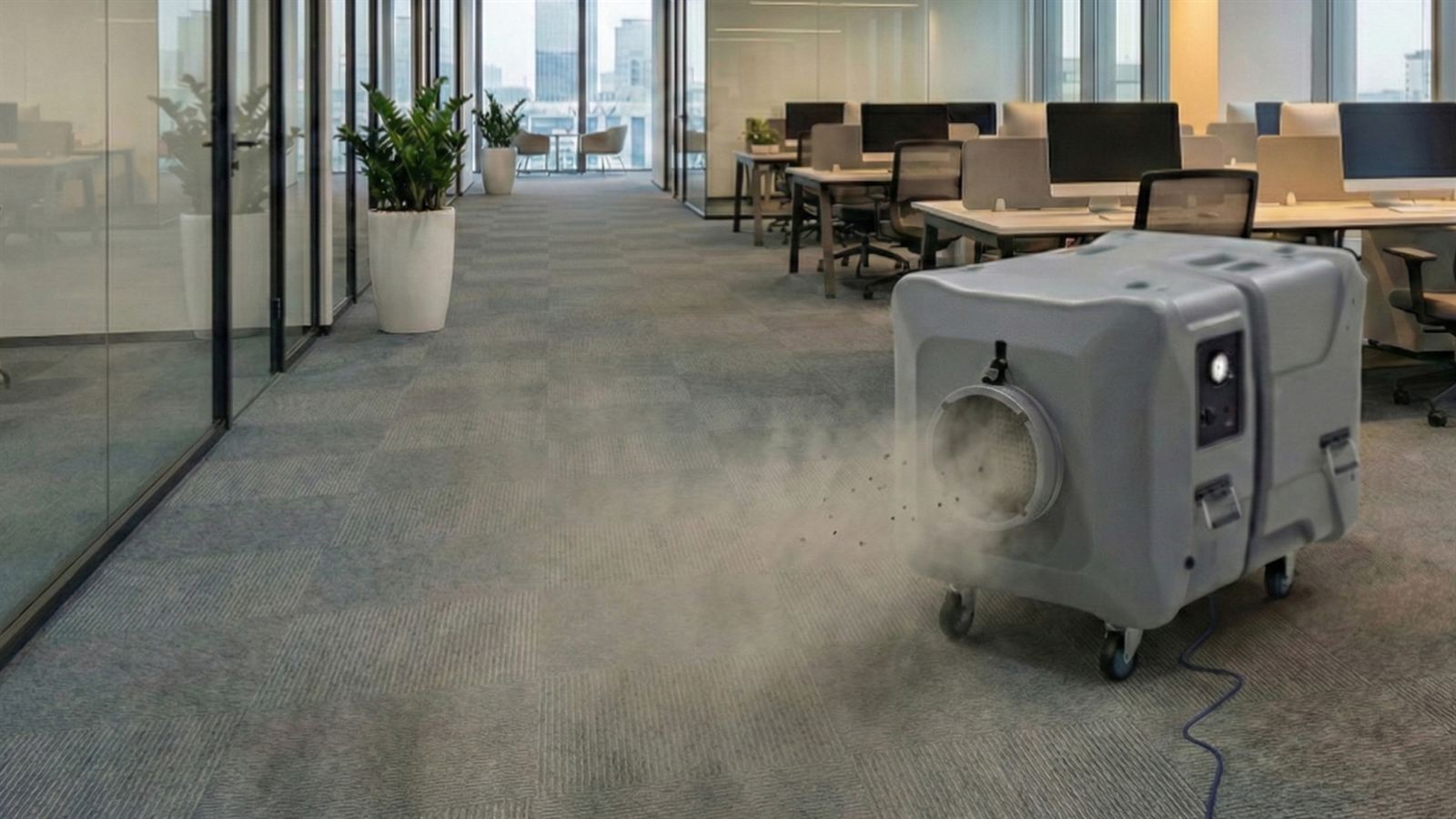
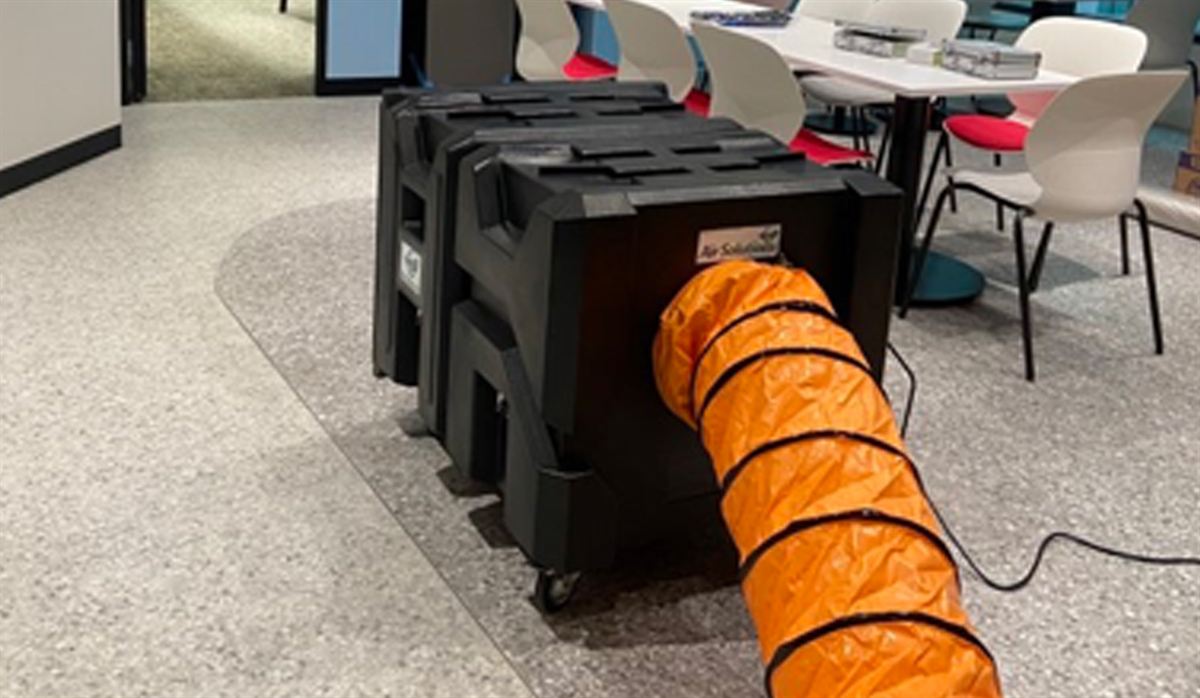
Negative air machines, contained ducting and a documented run — on occupied floors, overnight, with the building's works rules respected.

Verification

Numbers, not reassurances.

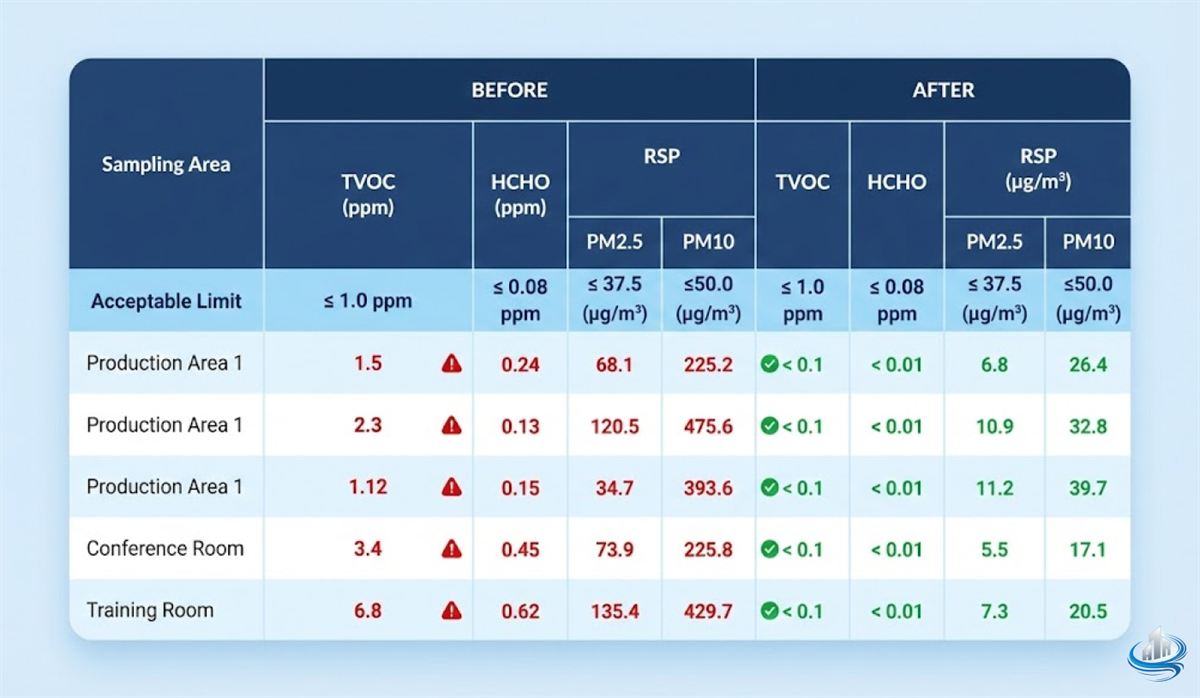
We sample the space before the flush and again afterwards, then report the readings against recognised acceptable limits. It is the same table your certifying body, landlord or safety officer will ask for.

Acceptable indoor air limits and typical post-flush readings
ParameterLimitAfter flush
TVOC≤ 1.0 ppm< 0.1 ppm
Formaldehyde (HCHO)≤ 0.08 ppm< 0.01 ppm
PM2.5 (RSP)≤ 37.5 µg/m³5.5–11.2 µg/m³
PM10 (RSP)≤ 50.0 µg/m³17.1–39.7 µg/m³

Typical results from a completed office flush, sampled across production, conference and training areas.

Sampling table showing TVOC, formaldehyde, PM2.5 and PM10 before and after an air flush

Equipment partner

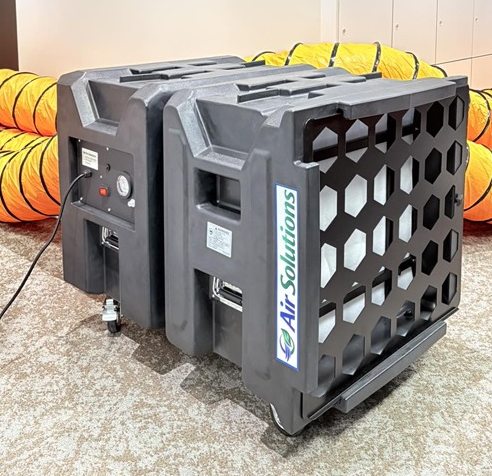
ASUVION-2000

The negative air machine behind our flushes: 800–2,000 CFM of adjustable airflow, HEPA and pre-filter stages, UV-C light and an ionizer — with a pressure gauge that tells the crew when a filter needs changing.

ASUVION-2000 negative air machine with ducting

Inquire about air flushing.

Send the floor area and your target move-in date. We will confirm the flush window and the equipment your space needs.